
The best floor is the one that works for your wet areas, household and substrate—not whichever material looks most convincing in a photo. Start by asking whether the surface is a general bathroom floor, a regularly soaked walk-in shower floor, or a space with known moisture problems.
At a glance: where each material fits
| Material | Advantages | Things to verify | Best fit |
|---|---|---|---|
| Porcelain tile | Durable surface; broad range of textures | Slip rating, grout, underlayment, waterproofing | Many bathrooms including carefully specified wet areas |
| Water-resistant / waterproof LVT | Comfortable underfoot; available in many designs | Manufacturer restrictions for standing water, edges, subfloor moisture | General bathroom floors when installation conditions permit |
| Natural stone | Unique appearance and texture | Porosity, sealing, finish, stains, weight, care | Design-led floors with appropriate specialist detailing |
| Sheet vinyl | Few seams; often cost-conscious | Seam detailing, adhesives, substrate, wet-zone approval | Some general bathroom floors |
| Engineered wood / laminate | Warm appearance | Moisture exposure, warranty exclusions and swelling risk | Only where product and conditions explicitly allow |
Porcelain tile: the versatile benchmark
Porcelain offers a wide choice of finishes, including stone and timber looks, and is regularly specified for bathrooms. The strongest argument is long-term surface durability; the biggest installation concern is everything beneath the tile. Grout alone does not substitute for a suitable waterproofing system.
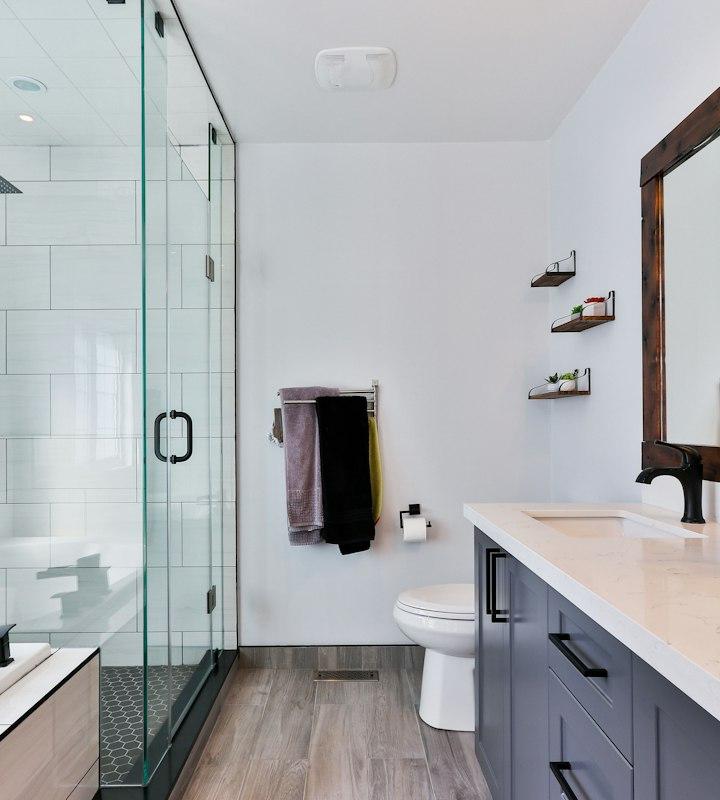
Porcelain floor tile
Look beyond color: the exact floor location determines required slip behavior, tile size and substrate preparation.
- Application-specific slip performance
- Dimensions and suitable laying pattern
- Manufacturer instructions and compatible substrate
- Grout, trims, waste and spare tile allowance
Product criteria only. No paid placement, unverified retailer price or affiliate recommendation.
Luxury vinyl: comfortable, but not universal
Some vinyl products are marketed as waterproof, which describes the plank or sheet—not necessarily an installed room. Water may still migrate around the perimeter, through joints or toward an unsuitable substrate. Always verify the precise manufacturer's guidance for bathrooms and showers.
Vinyl may make sense when the floor stays mostly outside direct shower spray and the substrate can meet installation tolerances. Beware of rolling the word “waterproof” into a claim that any product belongs inside a wet room.
Vinyl floor products
Two similarly named products can have very different installation permissions and service conditions.
- Bathroom and wet-room restrictions
- Edge and joint sealing instructions
- Subfloor flatness and moisture limits
- Underfloor heating and adhesive compatibility
Product criteria only. No paid placement, unverified retailer price or affiliate recommendation.
Natural stone: beautiful, demanding
Natural stone can provide depth and variation that manufactured surfaces imitate. But limestone, marble, slate and other stones behave differently. Porosity, finishing, cleaning chemistry and sealing regimes need to match the actual material and use.
A polished stone that looks impressive in a showroom may not be appropriate for a wet walking surface. Ask for technical data and samples rather than relying on the stone name alone.
Try finishes on your existing bathroom
Bring a room photo and your preferred materials into Archicova chat. Treat the design as inspiration, then use your confirmed measurements for planning.
Start in Archicova chat ↗Choose by renovation scenario
| Your situation | A sensible starting direction |
|---|---|
| High-use family bathroom | Durable, readily maintained materials with appropriate traction |
| Budget-conscious cosmetic update | Investigate suitable vinyl or retaining sound existing floors where technically feasible |
| Walk-in shower floor | Choose a specifically approved wet-area surface and complete waterproofing system |
| Luxury natural finish | Stone or high-quality stone-look porcelain, after maintenance and safety assessment |
| Existing dampness or unevenness | Fix the cause and substrate first; do not select finishes yet |
Before placing an order
- Measure the net floor area, thresholds and exposed edges.
- Confirm substrate construction and any moisture problems.
- Identify wet zones and request the manufacturer's application guidance.
- Compare the installed system cost—not merely the price per square meter.
- Order samples and obtain an installation specification before purchasing.
Sources & further reading
Links to primary guidance and independent demonstrations used in this article.
Related reading: budgeting a renovation and choosing a compact vanity.