
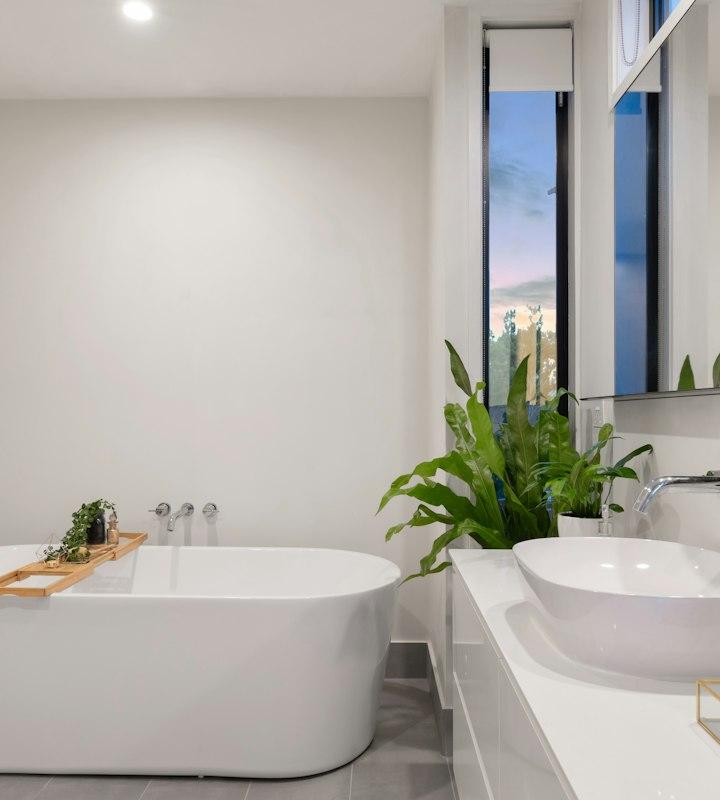
A bathroom does not need more square meters to work better. It needs fewer daily frustrations. Before choosing a material palette, write three constraints: what doesn't work, what must stay and what you can spend. For example: “The vanity has no storage; plumbing stays in place; I want a warm look.” That's a far stronger brief than “make it luxurious.”
12 compact-bathroom upgrades worth considering
01 / Keep plumbing where it works
Replacing a basin or shower in the same location can reduce disruption. First check for leaks, old waterproofing, inadequate ventilation or damaged substrates; cosmetics won't fix underlying defects.
Shopping check: Check fixture dimensions and pipe connections before buying replacements.
02 / Give the vanity a proper storage job
A floating vanity can expose more visible floor, but usable drawers matter more than a fashionable gap below. Measure door swing, user clearance and any awkward pipe boxing.
Shopping check: Compare depth, drawer cut-outs, mounting and moisture-resistant finish.
03 / Create one deliberate focal point
Choose one strong surface—perhaps the shower wall in deep blue or a patterned splashback. Keep nearby finishes quiet, then repeat the accent once in hardware or textiles.
Shopping check: Order real samples and compare colors under your bathroom lighting.
04 / Choose tile dimensions for the space
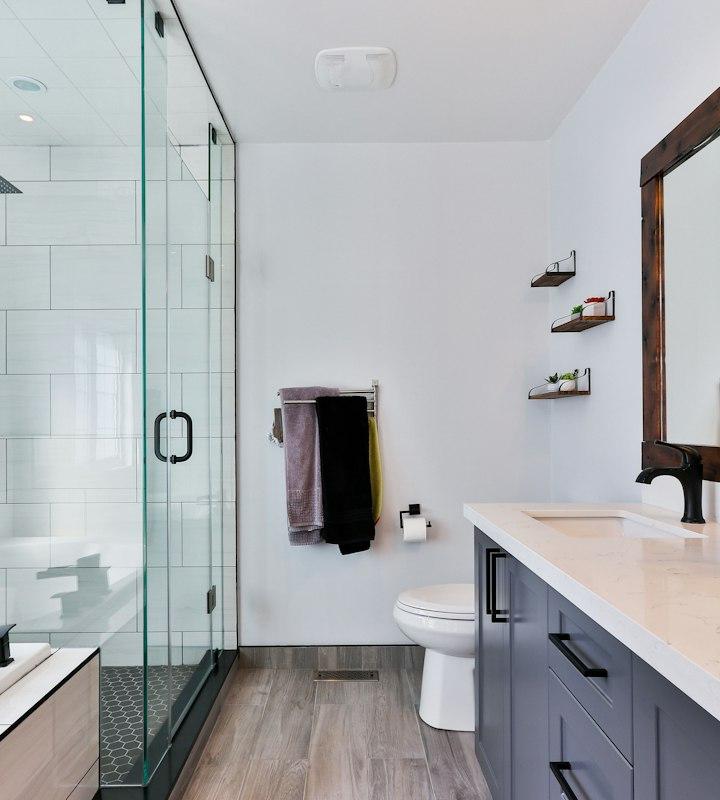
Larger tile faces may visually calm a wall. Small shower floors, however, can need different tile geometry to accommodate slopes; never choose by appearance alone.
Shopping check: Ask about substrate compatibility, slip resistance and wet-area specifications.
05 / Use a mirror as task lighting
A well-proportioned mirror makes grooming more comfortable. Plan useful face-level illumination instead of depending only on decorative light strips.
Shopping check: Check electrical zoning and ask a qualified professional where required.
06 / Build storage upward, carefully
A shallow cabinet, narrow shelf or mirrored cupboard can reclaim space. Recesses should only be considered after checking that the wall can be altered safely.
Shopping check: Measure projecting depth and avoid obstructing movement.
Test ideas against your real room
Create your Archicova account, describe what must stay and use inspiration to guide your room redesign in chat.
Start in Archicova chat ↗07 / Use a restrained palette
Try two main materials and one accent as a working design rule. Pair warm stone with oak; or soft gray with white and brushed metal. Test samples before committing.
Shopping check: Check cleaning and maintenance requirements, not just color.
08 / Improve what you touch every day
Changing an inconvenient tap, cracked mirror or awkward towel rail can have a greater daily impact than extensive decorative work.
Shopping check: Verify mounting locations, compatibility and professional requirements.
09 / Let the door clear the room
Before introducing new cabinets, map the path of bathroom and shower doors and the usable space around fixtures. Sliding or outward-opening arrangements are only suitable where allowed and feasible.
Shopping check: Check relevant local safety and building constraints.
10 / Treat ventilation as a design feature
Condensation, persistent dampness and odors should influence the renovation scope before you hide them behind new finishes.
Shopping check: Select appropriately sized exhaust equipment and have the duct route reviewed.
11 / Make the shower screen feel lighter
A simple clear screen can visually open a cramped bathroom. But layout, drainage and splash containment must work in reality.
Shopping check: Check entry width, tray dimensions and glass specifications.
12 / Spend where failure is expensive
Reliable waterproofing, ventilation and substrate preparation matter more than a decorative upgrade. A small refresh is only a saving when the underlying construction is sound.
Shopping check: Ask your installer what waterproofing system is appropriate and keep records.
Which changes come first?
Start with the functional bottleneck rather than the decorative finish. If you struggle with storage, prioritize cabinet dimensions and access. If surfaces stay wet, investigate ventilation and waterproofing. If the space feels visually crowded but functions well, look at lighting, mirror and palette before changing the plan.
What to compare when buying
Compact vanity and mirror cabinet
The best-looking cabinet won't help if drawers hit the door or the waste pipe occupies the entire storage volume.
- Depth, width and installed height
- Door and drawer clearances
- Wall support and plumbing cut-outs
- Moisture-resistant materials and care
Product criteria only. No paid placement, unverified retailer price or affiliate recommendation.
Bathroom tile and flooring
Avoid buying by color alone. Suitability varies between general floors, wet-area floors and walls.
- Slip resistance for the exact application
- Substrate and waterproofing compatibility
- Tile size, pattern and waste allowance
- Cleaning, grout and surface maintenance
Product criteria only. No paid placement, unverified retailer price or affiliate recommendation.
What a beautiful image cannot tell you
Visual references can inspire a layout but cannot establish hidden water damage, wiring, pipe conditions or waterproofing. Ventilation and moisture control deserve attention early: the U.S. Environmental Protection Agency recommends adequate bathroom exhaust and keeping wet assemblies protected. Electrical, structural and wet-area work may require appropriately qualified trades and local approvals.
Sources & further reading
Links to primary guidance and independent demonstrations used in this article.
Continue with bathroom inspiration, the complete bathroom renovation hub, or our AI bathroom design explainer.