
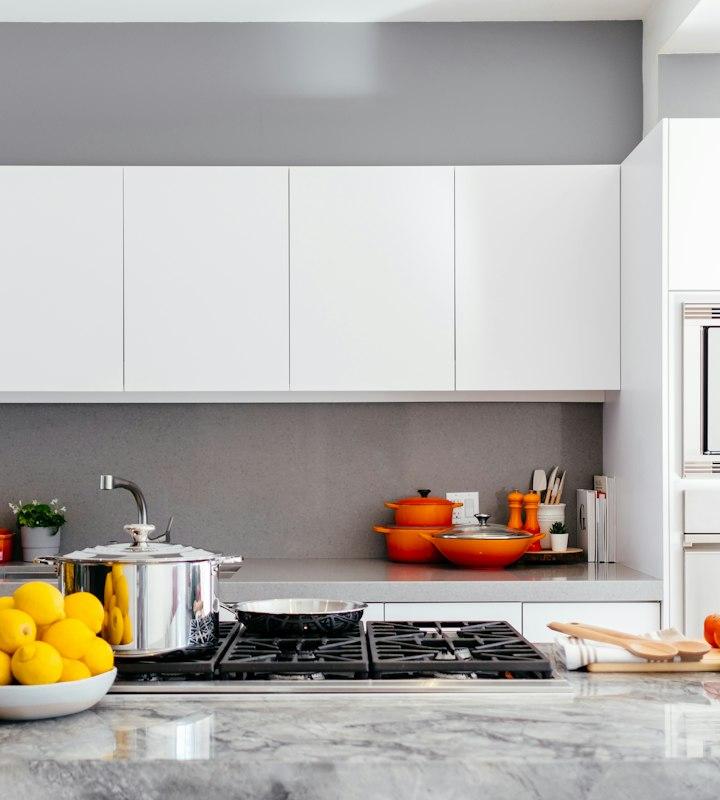
Renovation decisions are easier when you separate what looks good from what fits the room, the building and the budget. This guide provides a practical framework you can adapt to your project. Prices and technical requirements vary by location and specification.
Start with the condition, not the color
Open every door and drawer. Check for swelling around the sink, loose hinges, sagging shelves, peeling laminate and boxes that are no longer square. Sound carcasses with a dated finish are often candidates for repainting or new doors. Cabinets with persistent water damage, unreliable fixings or a fundamentally unsuitable layout may justify replacement.
Painting only changes the surface. It does not improve structural strength, storage ergonomics or missing ventilation. If the layout works and the wood or finish is compatible, retaining cabinets may also avoid a large portion of demolition waste.
Painting vs refacing vs replacing
| Option | Best when | What it cannot fix |
|---|---|---|
| Paint existing doors | Boxes and fronts are stable; style is the main issue | Severe swelling, poor layout, broken hardware |
| Refinish / reface | Cabinet boxes are sound but fronts are dated or damaged | Weak carcasses or awkward configuration |
| Replace cabinets | Layout, storage, moisture damage or dimensions demand change | Adds cost, waste and installation disruption |
Before pricing a refacing project, measure every door, drawer, exposed end panel and hinge position. A door-only quote may leave trim, plinths and specialist end panels out of scope.
How to make painted cabinets last
- Identify whether the surface is solid wood, painted MDF, laminate or a factory-coated finish.
- Clean thoroughly using a compatible degreaser; grease near the hob is a common adhesion problem.
- Repair loose hardware, failed joints and small surface defects first.
- Use the preparation and primer system recommended for that specific substrate.
- Allow the full curing time before heavy use. Dry-to-touch does not mean ready for aggressive cleaning.
Build a fair comparison
Request three itemized estimates: preparation and paint, replacement fronts with hardware, and a full cabinet supply-and-install. Compare the same appliance locations, worktop retention, disposal, installation and making-good assumptions. For US context, Angi's 2026 guide reports professional cabinet painting often costs less than refacing, but its figures should not be applied directly to other countries or DIY work.
Remember opportunity cost: sanding, drying and keeping a kitchen partly out of service may be substantial for a busy household. Ask how long the space will be unusable, not just when workers finish.
A five-question decision test
- Is there moisture damage or structural movement?
- Do you genuinely like the current layout?
- Are hinges, runners and carcasses serviceable?
- Would changing doors alone give the visual improvement you want?
- What does each option cost including labor and disruption?
If the first three answers are favorable, start by pricing the lightest intervention. See our kitchen budget guide and kitchen inspiration collection for next steps.
Turn the research into a room-specific plan
Start with a photo of your room, compare design directions and create provisional materials and work steps. Check measurements, trades and supplier prices before buying.
Start in Archicova chat ↗Sources & further reading
Links to primary guidance and independent demonstrations used in this article.
More renovation guides in the Archicova Edito. Explore kitchen renovation or bathroom renovation.